
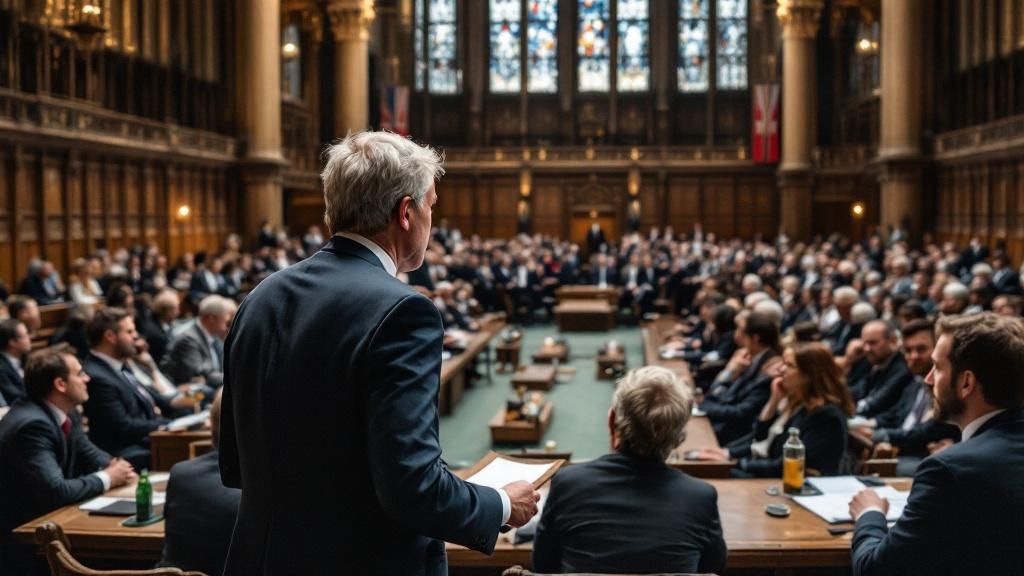
Parliament has descended into heated debate over proposed changes to the country’s immigration system, with cross-party consensus proving elusive. Whilst some MPs champion tighter border restrictions and lower net migration numbers, others warn of possible economic and social impacts. The government’s recent legislative measures have exposed significant rifts within both major parties, as rank-and-file MPs raise worries ranging from labour market impacts to social cohesion. This article explores the conflicting positions, major stakeholders’ views, and the political consequences of this contentious policy battle.
Government’s Proposed Immigration System
The government’s revised immigration structure represents a thorough overhaul of existing border control and visa application systems. Ministers have framed the proposals as a realistic response to concerns raised by the public concerning net migration figures whilst upholding the United Kingdom’s ability to compete in drawing in skilled labour and overseas professionals. The framework includes changes in points systems, sponsorship standards, and settlement routes. Officials argue these measures will provide improved control over immigration levels whilst assisting vital industries experiencing staffing gaps, especially the healthcare, social care and technology sectors.
The suggested framework has sparked considerable parliamentary scrutiny, with MPs querying both its feasibility and core assumptions. Critics maintain the government has underestimated implementation costs and potential regulatory pressures on employers and public services. Supporters, conversely, stress the need for firm measures on border regulation, citing public sentiment research showing widespread concern about rapid demographic change. The framework’s viability will largely depend on organisational resources to process applications efficiently and maintain standards across the private sector, areas where previous immigration reforms have faced substantial obstacles.
Primary Strategic Objectives
The government has identified five core objectives within its immigration framework. First, lowering migration numbers to sustainable levels through tighter visa controls and enhanced border security measures. Second, focusing on skilled workers matching identified labour market gaps, particularly in health services, engineering, and research fields. Third, promoting social cohesion by introducing enhanced English language requirements and citizenship assessments for those seeking permanent residence. Fourth, tackling illegal immigration through greater enforcement investment and international partnership arrangements. Fifth, sustaining Britain’s reputation as a destination for legitimate business investment and scholarly collaboration.
These objectives demonstrate the government’s endeavour to balance competing demands: satisfying backbench MPs calling for stricter immigration controls whilst preserving economic interests necessitating access to global talent. The framework clearly prioritises points-based assessment over family reunification pathways, substantially changing immigration categories. Ministers have emphasised that intended modifications accord with post-Brexit governance autonomy, allowing the United Kingdom to develop distinctive immigration rules independent of European Union precedent. However, implementation of these objectives faces significant parliamentary opposition, especially concerning settlement restrictions and family visa changes which humanitarian organisations have criticised as excessively punitive.
Implementation Timeline
The government proposes a phased implementation schedule spanning eighteen months, beginning with legislative passage and regulatory framework creation. Phase one, starting right after royal assent, focuses on setting up visa processing infrastructure and upskilling immigration officials. Phase two, scheduled for months four through nine, brings in revised points system and employer sponsorship adjustments. Phase three, completing the implementation period, deploys enhanced border security technologies and enforcement of integration requirements. The government calculates it will need approximately £250 million for system upgrades, extra staff, and international coordination arrangements, though independent assessments indicate actual costs might well outstrip government projections.
Timeline viability is disputed within Parliament, with opposition parties challenging whether eighteen months allows sufficient preparation for such extensive changes. The Home Office has previously experienced substantial delays rolling out immigration reforms, raising scepticism regarding delivery commitments. Employers’ organisations have cautioned that compressed schedules generate instability for sponsorship applications and staffing strategies. Furthermore, parliamentary procedures themselves may prolong the legislative process beyond government expectations, particularly if amendments become required following thorough examination. The implementation timeline’s success will ultimately depend on cross-party cooperation and adequate resource allocation, neither of which currently appears assured given existing political divisions surrounding immigration policy.
Critical Viewpoints and Concerns
Labour opposition spokespeople have lodged serious objections to the immigration policy plans, arguing that more stringent measures could damage the UK economy and critical public sector services. Shadow ministers argue that health, social care, and hospitality services depend significantly on migrant workers, and lowering immigration numbers may worsen present labour shortages. Opposition frontbenchers emphasise that the proposal neglects to confront fundamental skills deficits and demographic challenges facing Britain, instead providing basic fixes to complex structural problems requiring comprehensive, evidence-based approaches.
Beyond Labour, the Liberal Democrats and Scottish National Party have articulated concerns about human rights implications and the treatment of asylum seekers under the proposed framework. These parties argue the legislation is deficient in proportionality and adequate safeguards for at-risk groups. Additionally, several backbench MPs from multiple parties worry about enforcement costs and bureaucratic burdens on businesses. Non-governmental organisations and immigration charities have similarly warned that the policy inadequately considers integration support and may marginalise already vulnerable communities through discriminatory provisions.
Economic and Societal Implications
The suggested immigration policy changes have substantial economic implications that have sparked widespread debate amongst business leaders and economists. Stricter controls could diminish labour shortages in important industries including healthcare, agriculture, and hospitality, potentially affecting output and expansion. Conversely, supporters argue that managed migration would ease pressure on public services and the housing market, ultimately benefiting sustained economic stability and allowing wages to stabilise in lower-skilled sectors.
Socially, the policy’s implementation raises important questions concerning social cohesion and integration. Critics contend that restrictive measures may foster divisiveness and undermine Britain’s diverse cultural identity, whilst proponents maintain that managed immigration supports better integration processes and lessens pressure on community services. Both perspectives recognise that sound immigration policy requires reconciling economic needs with social stability, though debate continues regarding where that equilibrium should be determined.
