
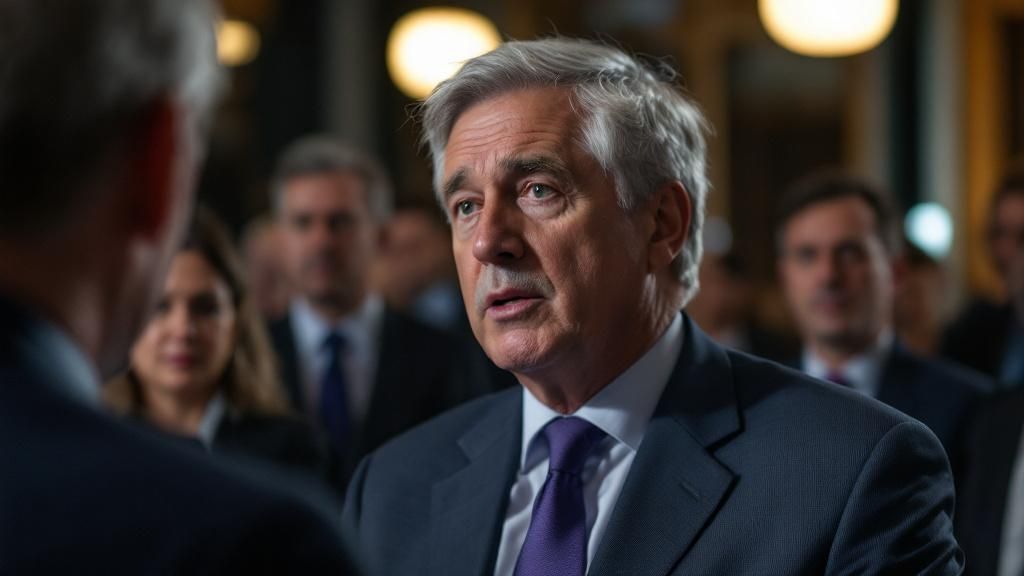
As families throughout the country contend with soaring energy bills and price increases reaching record levels, the opposition figurehead has mounted a biting attack on the Government’s handling to the cost of living crisis. In a tense parliamentary confrontation, the Labour party has scrutinised the government’s inadequate relief measures, calling for greater action to help financially stretched families. This article explores the intensifying divisions centred on the crisis and explores the competing visions for economic relief.
The Opposition party’s Criticism of Government Policies
The leader of the opposition has increased pressure of the government’s response to the worsening affordability crisis, arguing that current measures fall woefully short of addressing the level of hardship facing British households. In parliamentary debate, the opposition has articulated a detailed critique spanning inadequate financial support, inadequate action in the energy sector, and a apparent absence of speed in addressing inflation. The opposition maintains that whilst families struggle with extraordinary costs, the government’s fragmented strategy simply treats symptoms rather than dealing with fundamental causes of financial hardship.
Central to the opposition’s argument is the contention that the government has badly miscalculated both the severity and duration of the crisis. Opposition representatives have pointed to statistical evidence indicating that vast numbers of families now experience real hardship, with many compelled to decide between heating and eating. The opposition maintains that the government’s initial response underestimated the crisis’s consequences, resulting in support mechanisms that proved inadequate when conditions worsened further. This error of judgment, they argue, reflects broader failures in economic prediction and policy planning.
Insufficient Support Measures
The opposition has consistently challenged government support schemes as insufficient and poorly targeted, arguing that price regulation frameworks do not adequately safeguard vulnerable populations sufficiently. Commentators highlight that whilst the government has implemented different funding schemes, including grants and council tax rebates, these initiatives provide only temporary relief without tackling underlying problems. The opposition maintains that means-tested benefits remain excessively narrow, excluding millions of working families who nonetheless struggle with rising costs. Furthermore, they argue the government’s approach lacks the boldness necessary to confront such an unprecedented economic challenge.
Opposition examination suggests that present welfare systems unfairly harm those earning mid-range salaries who miss out on access requirements for targeted assistance. The party has proposed new models centred on across-the-board allowances, broadened support schemes, and state involvement in power industries to maintain affordability. They stress that interim steps, whilst welcome, cannot substitute for fundamental systemic change. The opposition argues that lacking major policy reform and enhanced government funding, working people will remain subject to acute financial strain for years to come.
Long-term Economic Strategy Concerns
Beyond pressing crisis intervention, the opposition has highlighted crucial concerns regarding the state’s long-term economic direction and competitive position. Opposition analysts argue that the present method emphasises near-term political appearances over sustainable economic planning, risking damage to Britain’s future prosperity. They contend that without deliberate investment in clean energy infrastructure, productive capacity, and human capital development, the nation risks sustained economic decline. The opposition emphasises that tackling cost of living challenges requires wide-ranging reforms targeting productive efficiency, technological innovation, and sectoral development alongside urgent relief measures.
The opposition has outlined concerns that government policy lacks coherence across different sectors, with energy policy, industrial strategy, and fiscal measures operating in isolation rather than as integrated components. Critics argue this disjointed strategy impedes tackling of underlying inflationary pressures and fundamental economic problems. The opposition advocates for a coordinated national strategy covering energy transition, manufacturing revival, and skills development. They maintain that genuine crisis resolution necessitates radical policy overhaul rather than incremental adjustments to existing frameworks.
Government’s Defence and Counterarguments
The government has robustly defended its economic strategy, arguing that the cost of living pressures are largely driven by worldwide circumstances beyond direct Westminster oversight. Ministers have emphasised the extraordinary scale of the energy crisis, stemming from geopolitical tensions and worldwide supply chain interruptions. They contend that their targeted support packages, covering the price cap on energy and cost of living payments, embody a measured and fiscally responsible approach. The Treasury maintains that overspending could compound inflation even more, undermining sustained economic stability and eventually prejudicing the same families the opposition purports to support.
Government spokespersons have emphasised the substantial financial assistance previously allocated, reaching billions of pounds in direct support to those in need. They maintain that their approaches reconcile short-term assistance with responsible financial stewardship, averting the cycle of indebtedness that unchecked spending could cause. Ministers also highlight their efforts in boosting energy security through renewable investments and supply diversification. The government contends that whilst the opposition delivers sympathetic language, their proposed solutions lack financial viability and would prove unsustainable without raising tax rates or additional debt.
Furthermore, government officials highlight their resolve to confronting core economic problems through productivity improvements and enterprise investment schemes. They maintain that enduring recuperation necessitates systemic economic transformation rather than short-term payments. The administration holds this approach in the end produces greater prosperity and security for every citizen.
