
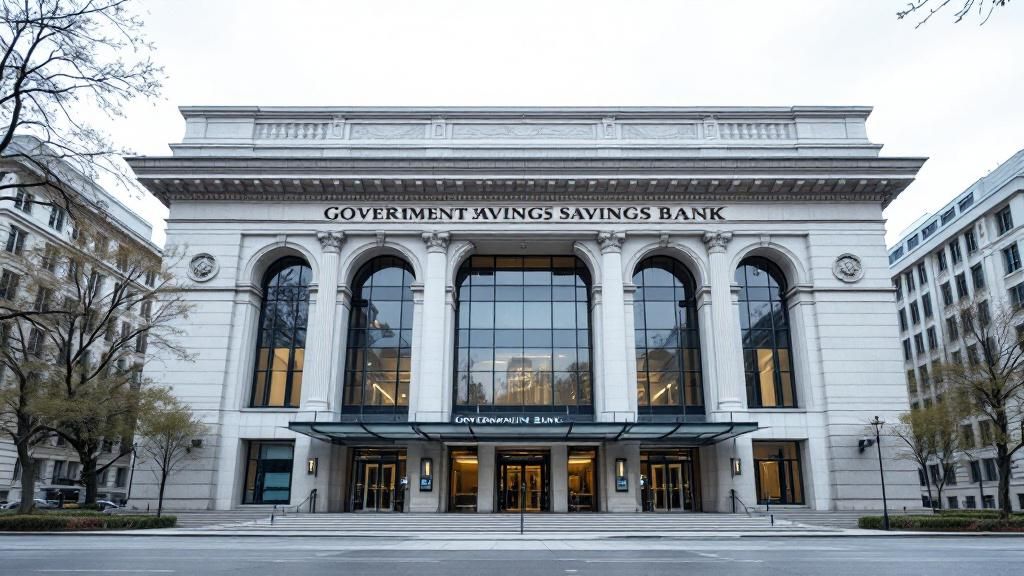
National Savings and Investments (NS&I) faces a financial liability that could reach hundreds of millions in compensation after widespread failures in handling customer accounts, with instances of bereaved families did not receive money rightfully owed to them. The government-backed bank, which caters to 24 million people, has been accused of a range of failings stretching over years, with issues spanning unpaid Premium Bond winnings to misplaced investments and delayed payments. Pensions Minister Torsten Bell will be presenting the scale of the problem to MPs in the Parliament on Thursday, with sources indicating approximately 37,000 customers could be impacted. Treasury officials are now liaising with NS&I to establish the precise financial settlement, though the true scale of the issues has yet to be determined.
The scale of the crisis emerging at the nation’s savings institution
The complete scope of NS&I’s operational failures is poorly understood, with Treasury officials continuing to ascertain the accurate settlement sum customers are owed. Investment manager Zoe Gillespie from RBC Brewin Dolphin identified the root problem, drawing attention to NS&I’s troubled modernisation programme, which is well behind timetable. “There looks to be some issues with likely technical or client support problems,” she told the BBC’s Today broadcast. The bank’s inability to complete its £3 billion tech transformation has evidently contributed to the series of failures impacting numerous savers and their families.
Individual cases highlight a deeply worrying picture of institutional failures. One bereaved daughter of a deceased saver was kept in the dark regarding Premium Bonds her mother held, whilst the bank at the same time failed to account for £2,000 in bonds registered in the daughter’s own name. In another instance, NS&I neglected to preserve records of two accounts linked to an investment portfolio, eventually refunding the family for tax interest and substantial legal costs they incurred trying to recover their money independently. Such cases demonstrate how families in mourning have borne further financial and emotional hardship.
- Premium Bond prizes denied to bereaved families of savers
- Payment delays and misplaced saver investments
- Bereaved families forced to hire legal representatives to recover funds
- £3bn modernisation programme years behind schedule
Bereaved families left without their rightful inheritance and investment returns
The shortcomings at NS&I have struck hardest those in mourning. Grieving relatives stated that the bank withheld money rightfully due to departed family members or their estates. Some families found that Premium Bond prizes belonging to their departed relatives were not paid, whilst others found investments had vanished from account records completely. The bank’s difficulty managing grief-related claims in a timely manner has worsened the emotional pain of the loss of a relative, compelling grieving relatives to deal with bureaucratic obstacles when they ought to have been mourning.
What makes these failures notably distressing is that some families have faced substantial extra expenses attempting to retrieve their inheritance. Several have been compelled to hire solicitors and legal professionals to pursue claims that NS&I should have dealt with straightforwardly. Beyond the financial burden, these families have experienced months or even years of uncertainty, continually pursuing the bank for answers about lost accounts, unclaimed prizes, and investment portfolios that appeared to have been removed from the institution’s systems completely.
Prize Bond winnings held back from bereaved family members
Premium Bond investors and their relatives have been particularly affected by NS&I’s administrative failures. When savers with Premium Bonds pass away, their next of kin have a entitlement to recover any winnings received during the decedent’s life or to move the bonds to beneficiaries. However, reports indicate NS&I systematically failed to notify families of prizes to next of kin, essentially retaining money that was owed to grieving families. Some family members only found out about the unpaid winnings long afterwards, by which time further issues had arisen.
The bank’s administration of Premium Bond accounts has been especially problematic when families themselves held distinct bonds alongside deceased relatives’ investments. In recorded instances, NS&I failed to account for both the deceased’s holdings and the family members’ individual bonds simultaneously, suggesting widespread failures in record-keeping rather than isolated errors. Families have reported the experience as intensifying their bereavement, requiring them to prove possession of investments the bank ought to have kept detailed records of.
- Retained monetary awards from deceased Premium Bond owners
- Failed to monitor several accounts held by identical families
- Did not inform heirs of legitimate inheritance entitlements
Upgrade programme cited as cause of widespread service delivery problems
NS&I’s continued struggles have been linked directly to a £3 billion upgrade programme that has missed its timeline by years. The setbacks in updating the bank’s technical systems appear to have generated widespread issues across service delivery operations, contributing to the processing errors that have affected large numbers of savers. Financial analysts have indicated that the bank’s failure to finish this essential upgrade on time has resulted in older platforms struggling to manage the scale and intricacy of client accounts, particularly those involving numerous relatives or deceased account holders.
The scale of the modernisation challenge facing NS&I cannot be understated. As a government-backed institution supporting more than 24 million clients, comprising over 22 million Premium Bond investors, the bank needs resilient technology equipped to manage complex inheritance scenarios and prize distributions. The postponements in updating these systems have rendered the organisation at risk of precisely the kinds of documentation errors now emerging. Industry observers have flagged that without rapid finalisation of the modernisation project, client confidence in NS&I may decline further.
Digital systems and physical infrastructure challenges at the heart of problems
According to portfolio manager Zoe Gillespie from RBC Brewin Dolphin, the customer service and technology issues plaguing NS&I are fundamentally grounded in the bank’s failure to update its systems on time. She stressed that NS&I must “take the initiative” to restore savers’ and investor trust in the organisation. The modernisation initiative’s postponements have resulted in a circumstance where aging infrastructure have difficulty managing customer accounts adequately, particularly in sensitive circumstances relating to inheritance matters and bereavement cases where precision and speed are critical.
Legislative review and public concerns grow over compensation bill
Pensions Minister Torsten Bell is expected to face searching questioning from MPs when he appears before the House of Commons on Thursday about the compensation payouts. The announcement will mark the initial official parliamentary acknowledgement of the scale of NS&I’s failings, with lawmakers expected to challenge the government on whether ultimately taxpayers could be liable for the multi-hundred-million-pound bill. The minister’s statement arrives as Treasury officials operate behind closed doors with NS&I to determine the specific amount owed to customers affected, though the complete extent of the problem stays unclear.
The potential taxpayer liability constitutes a significant political concern for the government, given that NS&I is a state-owned institution. Questions are already mounting about how such extensive operational breakdowns were allowed to persist for years without sufficient oversight or intervention. The government will need to offer assurance that proper accountability mechanisms exist and that steps are being taken to avoid comparable problems recurring. With approximately 37,000 customers possibly impacted, the compensation bill could easily exceed several hundred million pounds.
| Key concern | Details |
|---|---|
| Taxpayer responsibility | MPs expected to question whether public funds will cover compensation costs for government-backed bank failures |
| Scale of problem | Approximately 37,000 customers affected with compensation potentially running into hundreds of millions of pounds |
| Systemic oversight failure | Questions over how errors dating back years went undetected and unaddressed by regulatory authorities |
| Institutional credibility | Government must restore public confidence in NS&I and demonstrate commitment to modernisation programme completion |
- Bereaved families withheld Premium Bond prizes and inheritance payments for extended periods
- Customers compelled to engage lawyers and incur legal costs to retrieve their own money
- NS&I upgrade project delayed years, creating technological systems problems
Renewing trust in Britain’s oldest financial institution
National Savings and Investments faces a critical test of its credibility as it attempts to rebuild confidence among its 24 million customers in the wake of the revelations of systematic administrative failures. The organisation, which can be traced back to 1861 as the Post Office savings service, has traditionally been seen as a secure option for British savers looking for state-guaranteed protection. However, the payout controversy threatens to undermine decades of accumulated public confidence. NS&I’s leadership must now demonstrate genuine commitment to addressing the root causes of these failures, especially the technological deficiencies that have plagued its £3 billion upgrade initiative, which remains years behind schedule.
Investment specialists have urged NS&I to act decisively to recover public confidence. Zoe Gillespie, investment advisor at RBC Brewin Dolphin, emphasised the requirement for the institution to “get on the front foot” in responding to customer concerns. The bank’s apology, whilst acknowledging the failures especially around bereavement, represents merely a first step. Meaningful restoration of confidence will demand open dialogue about the modernization program’s progress, defined schedules for resolving customer complaints, and comprehensive measures preventing such failures from happening again. Without swift and substantive action, NS&I faces losing the trust that has supported its position as Britain’s foremost state-backed savings provider.
